


 cp-webdesk
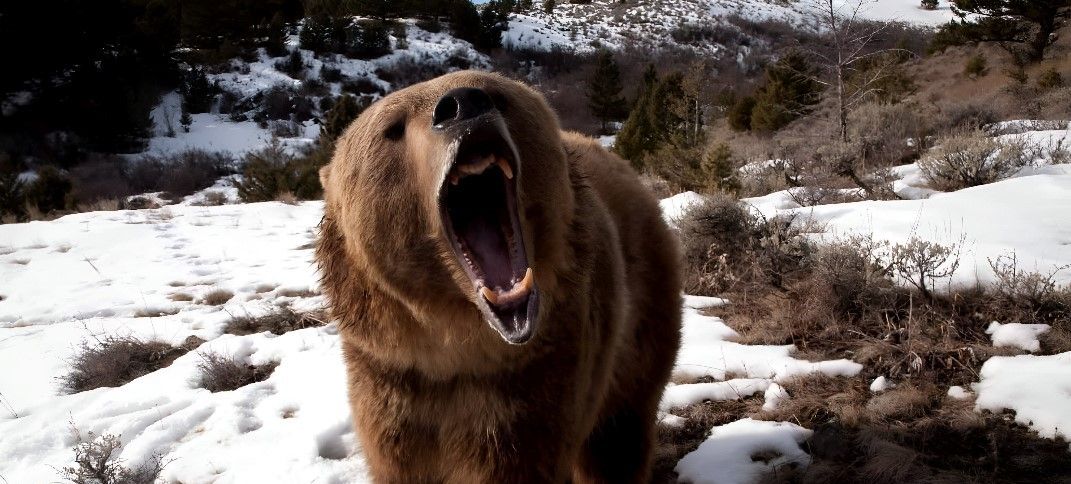
In the wild heart of Banff National Park, spring has its own unmistakable signal—not a blooming flower or birdsong, but the powerful stride of Bear 122, affectionately known as “The Boss.”
This April, trail cameras in the Lower Bow Valley caught the first glimpse of the legendary grizzly bear as he emerged from hibernation, heavier, older, and just as dominant as ever.
WHO IS THE BOSS BEAR:
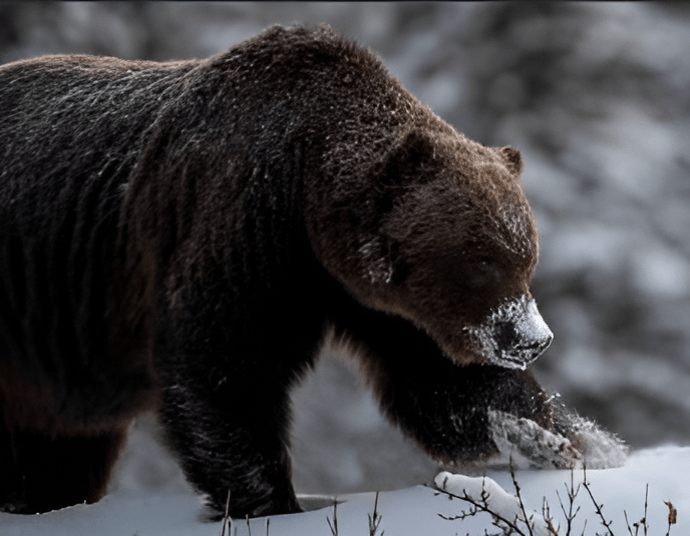
Officially designated as Bear 122, he’s more famously known around Banff as “The Boss”—a dominant grizzly who has outlasted his rivals, survived a train collision, and sired a large portion of the park’s grizzly bears. Weighing close to 295 kilograms and believed to be around 24 years old, The Boss is widely considered Banff’s alpha bear.
The Boss has been seen patrolling highways, railway lines, and berry-rich areas left behind by wildfires. He has an uncanny sense of where and when to find high-calorie food.
But his dominance isn’t just physical. Genetic testing reveals that Bear 122 has fathered at least five cubs in the region — including offspring from Banff’s well-known female bears, Numbers 64 and 72. And the actual number may be even higher.
And when competitors get too close, The Boss shows no mercy. In 2013, park officials discovered the skeletal remains of a black bear—reduced to just bones and paws—while Bear 122 was still feeding at the scene. Grizzlies may scavenge when the chance arises, but this was no accident. Investigators believe the black bear crossed into forbidden ground — The Boss’s domain — and paid the ultimate price. It wasn’t a meal of opportunity; it was a fatal mistake.
TRAIN COLLISION:
At some point during his reign in Banff National Park, The Boss was hit by a moving freight train. This is not uncommon—many bears have died on the tracks, often while scavenging for spilled grain or carcasses. But in The Boss’s case, he survived. Details of the exact incident are limited, likely due to its remote location, but wildlife trackers and biologists confirmed signs of a collision—such as limping, injuries, and trackside bear activity—followed by his eventual recovery.
Most bears don’t survive such collisions. The fact that Bear 122 did, and continued to thrive afterward is why he’s called “indestructible.” Not only did he survive the collision, he came back. The tracks offer something rare in the rugged Rockies: an easy source of calories, from scattered grain to the occasional animal carcass. And The Boss knows it.
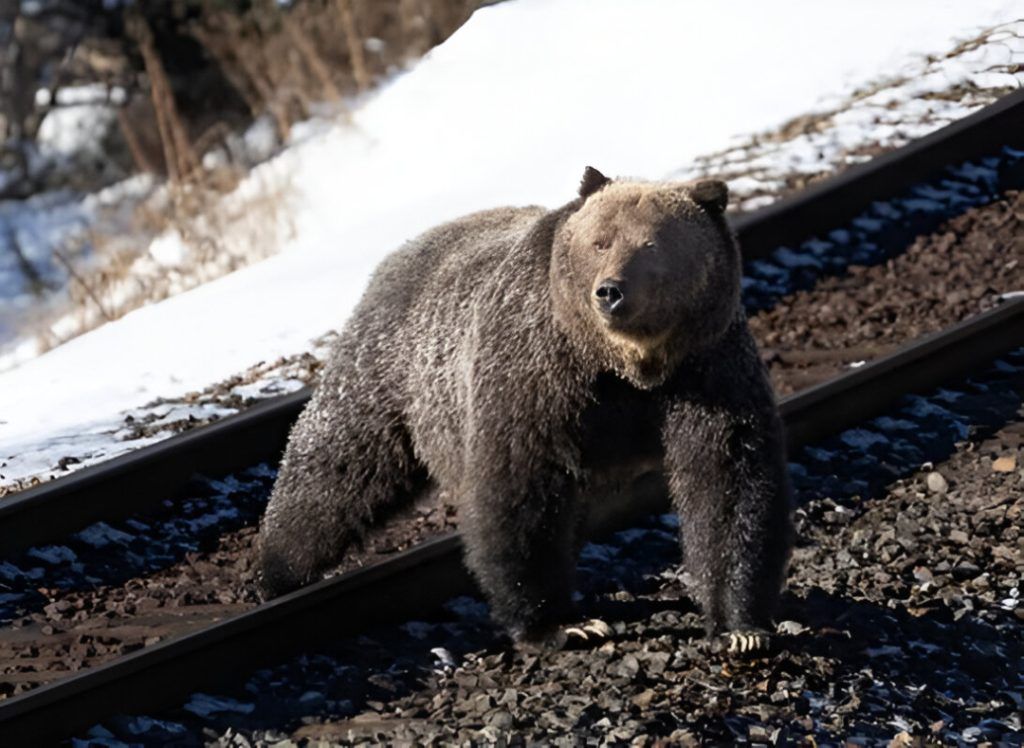
His fearless presence near human-made paths led into a rare case study. As researchers tracked his movements, a striking pattern emerged: The Boss doesn’t just survive near the rails and roads of the Rockies — he owns them, gliding along these corridors like veins of opportunity, harvesting food where few dare to roam.
THE OLD KING AND THE RISING TIDE:
As Bear 122, “The Boss,” pushes into his mid-20s — a senior age for a wild grizzly, the balance of power in Banff’s backcountry begins to shift. Younger bears, stronger and more restless, are emerging. Some may even carry his DNA, but that doesn’t make them any less of a threat. These younger bears are starting to assert themselves, testing boundaries, and encroaching on the territories he’s ruled for over a decade.
But dominance in the wild isn’t passed down — it’s fought for. And The Boss, though older, remains formidable. His deep knowledge of the landscape, his calculated movements along food-rich corridors, and his sheer presence keep challengers at bay… for now. The encounters may not always be seen, but the tension is there — a quiet, constant undercurrent in the forest. The old king still holds the crown, but the next generation is watching, waiting.